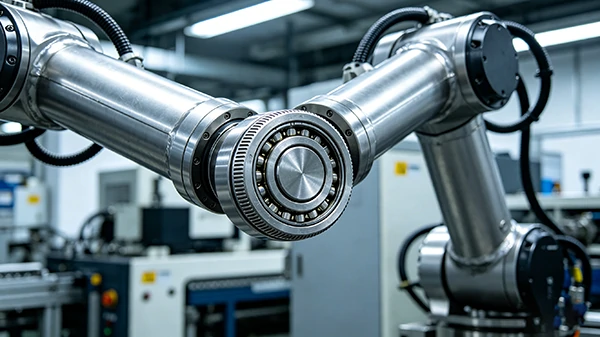
This guide details Articulation bearing installation steps, required tools, notes and maintenance to ensure stable operation.
Содержание
– Cleaning cloth or lint-free cloth
– Suitable cleaning agent (e.g., isopropyl alcohol)
– Lubricating oil or grease
– Specialized installation tools (e.g., press machine, manual press-in tool, bearing heater, etc.)
– Measuring tools (e.g., vernier caliper, micrometer, etc.)
– Carefully check the Articulation bearing and supporting installation components (such as shaft, bearing housing) to confirm no damage or defects.
– Verify the specification and model of the joint bearing to ensure they fully match the requirements in the design plan.
Step 1: Cleaning
Use a cleaning cloth with a cleaning agent to thoroughly wipe the surface of the joint bearing and the contact surface of the installation components, removing anti-rust oil, dust and other impurities. At the same time, ensure the installation environment is clean and dust-free to prevent impurities from entering the bearing and affecting subsequent use.
Step 2: Dimension Verification
Use measuring tools to accurately detect the shaft diameter and bearing housing inner diameter, confirming their dimensions meet the installation standards of the joint bearing. Ensure both the shaft diameter and housing inner diameter fall within the specified tolerance range to guarantee tight fit between them after installation and avoid loosening risks.
Step 3: Lubrication
Evenly apply an appropriate amount of lubricating oil or grease to the contact parts between the joint bearing and installation components. This reduces friction during installation, avoids component wear, and provides basic lubrication for subsequent operation.
Step 4: Heating Operation (Optional)
For large-sized joint bearings, you can use a bearing heater to heat them to a suitable temperature (usually 80-100℃). The principle of thermal expansion and contraction reduces installation resistance and facilitates smooth installation. Ensure uniform temperature during heating, avoid local overheating or overall excessive temperature, and prevent bearing damage.
Step 5: Press-Fitting
Use a press machine or manual press-in tool to smoothly press the joint bearing into the bearing housing hole or shaft. Keep the force uniform and stable during press-fitting. Never use excessive impact or knocking, as this may cause bearing deformation or damage and affect its performance.
Step 6: Fixing
If the joint bearing needs fixing after installation, you can use fasteners such as retaining rings, snap rings, or set screws for reinforcement. After installation, check the firmness of the fasteners to ensure they do not loosen and guarantee stable установка подшипников.
Step 7: Post-Installation Inspection
After installation, test the axial and radial clearance of the joint bearing to confirm its value is within the range specified in the design. Then manually rotate the shaft or joint bearing to check if it operates smoothly without jamming, abnormal noise or other abnormalities, ensuring qualified installation.
Throughout the installation process, avoid sweat, dust, debris and other substances from entering the interior of the joint bearing. This prevents damage to the bearing’s lubrication effect, avoids affecting its normal operation, and prolongs its service life.
During press-fitting and installation, always keep the force uniform. Eliminate excessive impact, knocking and other behaviors to prevent joint bearing deformation or damage and ensure installation quality.
After installing the articulation bearing, regularly check its operating status. Timely perform cleaning and lubrication to maintain good operating conditions for the bearing and ensure its long-term stable operation.
Strictly follow the installation manual and usage instructions provided by the joint производитель подшипников during installation. Ensure each step complies with specifications to guarantee the correctness of installation and subsequent use.
Adopting standardized installation methods and careful operation processes can effectively ensure the performance and service life of joint bearings. During installation, strictly implement core steps such as cleaning, lubrication and press-fitting, and avoid problems such as improper force and contamination. At the same time, regular inspection and maintenance can further improve the operational stability of joint bearings and ensure the normal operation of related equipment.
 English English
  العربية
 Deutsch (Sie)
 Español
 Français
 Bahasa Indonesia
 Italiano
 日本語
日本語
 Português
 Русский
 Türkçe
 简体中文
简体中文
 Nederlands (Formeel)
 Svenska
