Every year, maintenance budgets absorb thousands of avoidable Ceramic Balls Advantages replacements — not because the bearings were defective, but because the specification, installation or lubrication decision made months earlier quietly determined the failure date. This guide is written to break that pattern.
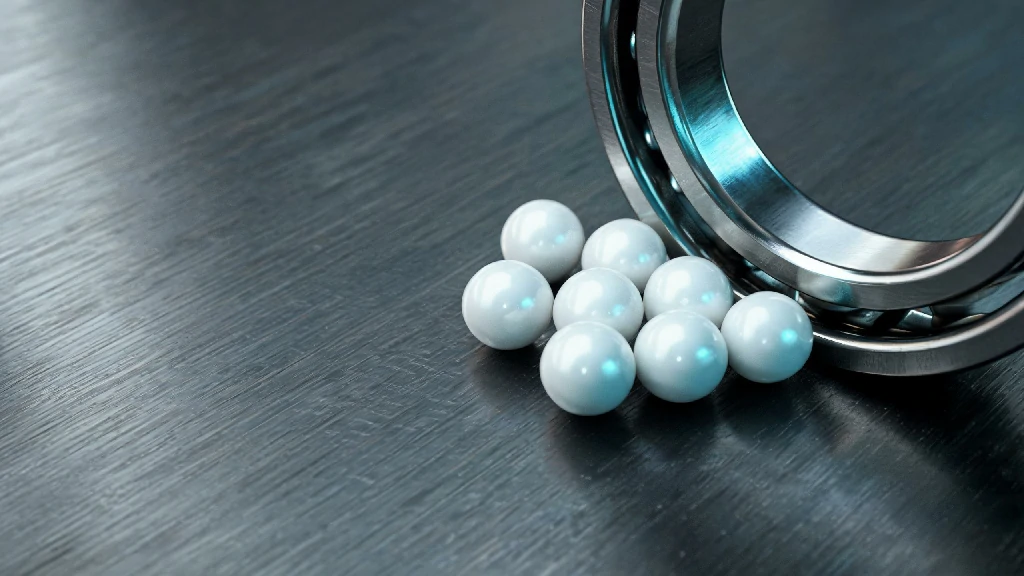
In this blog, we’ll explore different kinds of ceramic balls like Alumina Oxide, Zirconia, Ruby Sapphire, Silicon Nitride, and Silicon Carbide — and how these materials compare.
Where They’re Used: You’ll find these balls in chemical and down-hole pumps, valves, bearings, gages, and flowmeters.
Alumina Oxide ceramic balls are great for really hot temperatures – they can handle up to 3180 °F!
Isi
Roughly one in six Ceramic Balls Advantages failures traces back to the day the bearing was installed. Mounting damage is silent — the bearing runs fine for weeks, then spalls along a line where a hammer blow brinelled the raceway. The procedure below eliminates the common traps.
Cold mounting with a sleeve and press is acceptable for small bearings; anything above roughly 50 mm bore deserves an induction heater. Open-flame heating is never acceptable — it creates local hot spots that change the steel’s metallurgy.
Industry field studies consistently attribute over a third of premature Ceramic Balls Advantages failures to lubrication problems — wrong type, wrong amount, wrong interval, or contamination. The lubricant is a machine element, not a consumable afterthought.
| Lubrication method | Best suited for | Critical note |
|---|---|---|
| Grease (lithium complex) | Sealed or hard-to-service positions | Fill 30–50% of free volume |
| Circulating oil / oil bath | High temperature, gearboxes | Level at center of lowest rolling element |
| Oil mist / air-oil | High speed (>60% of limiting speed) | Precise metering, minimal drag |
| Solid / dry film (MoS2) | Extreme heat, vacuum | Limited kapasitas beban |
Quantity matters as much as type. Over-greasing causes churning: the rolling elements plow through excess grease, temperature climbs 20–40°C, oxidation accelerates, and the grease’s base oil separates. As a field rule, fill 30–50% of the free internal volume for general duty, and nearer 30% for high speed.
Never mix grease thickener families (lithium with calcium sulfonate, for example) without verifying compatibility — incompatible mixtures can soften and leak out within weeks. When in doubt, purge completely and refill with the new product.
A failed Ceramic Balls Advantages is evidence. Each failure mode leaves a characteristic signature on the raceways, rolling elements and cage, and reading that signature correctly is the difference between fixing the machine and replacing the bearing every six months.
| Failure mode | Most likely root cause | Corrective action |
|---|---|---|
| Spalling (flaking raceways) | Overload or end of fatigue life | Recalculate required Cr; upsize |
| Smearing / skidding | Insufficient load or lubricant starvation | Preload; improve lubrication |
| Blue/brown discoloration | Operating above temperature rating | Review speed, lubricant viscosity, cooling |
| Cage wear or fracture | Misalignment, shock, poor lubrication | Check mounting precision and fits |
| Fretting / abrasive scoring | Contamination or micro-motion | Improve sealing; correct fits |
| Electrical erosion (fluting) | Shaft currents (VFD motors) | Insulated or bantalan keramik hibrida |
Two habits make diagnosis dramatically faster. First, photograph the bearing in position before removing it — load-zone orientation reveals misalignment instantly. Second, keep the failed bearing until the replacement has run successfully for a month; if the new bearing shows the same signature, the root cause is in the machine, not the bearing.
A softer coating generally allows more local deformation under comparable conditions. That may help cushioning and conformity, but it can conflict with dimensional stability or rolling-resistance requirements. A harder coating can reduce indentation, yet the best choice still depends on compound, thickness, load, speed, and contact geometry.
Surface finish. A ground finish in the Ra 0.4–0.8 μm range is standard for this type of rotating fit. A rougher finish accelerates bushing wear and gives contaminants more surface to lodge into.
Standard bearings are not designed to withstand extreme heat and may experience deformation, accelerated wear, or premature failure. Their lubricants can also break down, causing poor performance and faster damage.
Once an anomaly is detected, the next step is to identify the type of fault. Convolutional Neural Netw
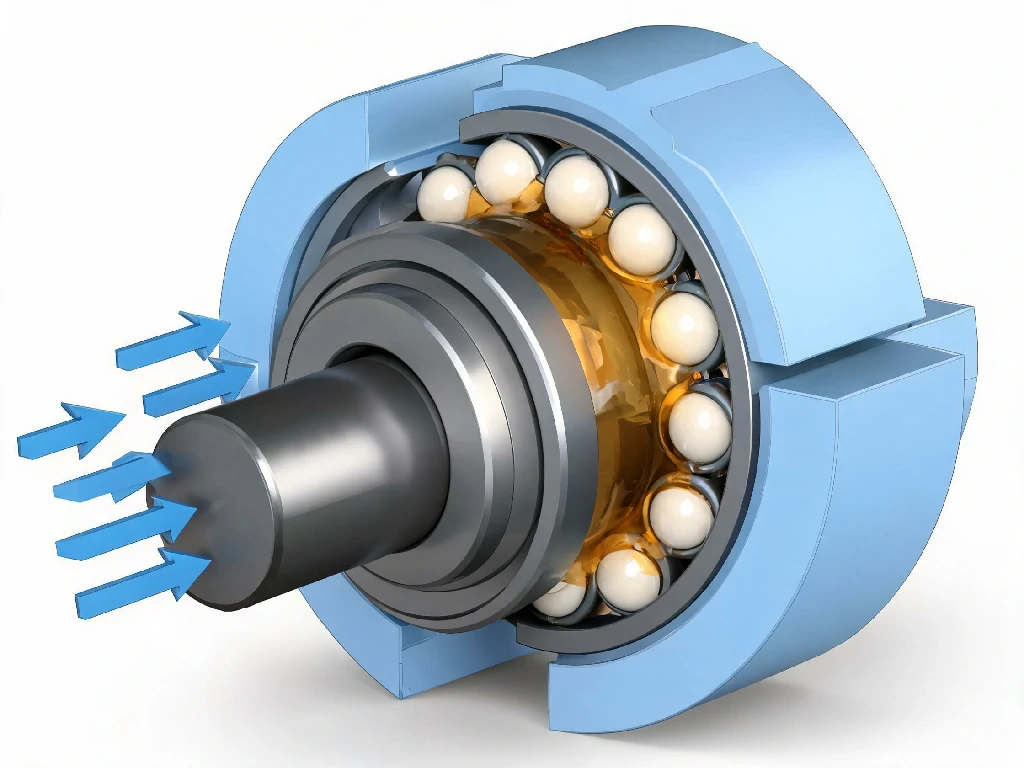
For general industrial duty, fill 30–50% of the free internal space; for high-speed applications stay near 30%. Over-greasing causes churning, raises operating temperature by 20–40°C and shortens grease life as surely as under-greasing does.
Heat uniformly to 80–110°C with an induction heater. Never exceed 120°C — above that, the steel’s temper and hardness begin to degrade permanently. Open-flame heating is never acceptable because it creates local hot spots.
Start from the manufacturer’s interval for the bore size and speed, halve it for every 15°C above 70°C operating temperature, and halve again for wet or dusty environments. Then validate with temperature trending and adjust from real data.
No. Modern bearings ship with a preservative film compatible with standard greases. Washing risks introducing contaminants and stripping protection. Wipe the bore and OD with a clean lint-free cloth and install.
Ceramic Balls Advantages selection and maintenance are not specialist mysteries — they are a sequence of explicit, checkable decisions. Get the load data right, respect the mounting tolerances, feed the bantalan the correct lubricant in the correct amount, and the rated service life stops being a hope and becomes the expectation.
Shanghai Furuisheng Precision Bearing Co., Ltd. engineers and supplies precision bearing solutions for industrial customers worldwide — from standard deep-groove and spherical roller bearings to application-specific designs in stainless, hybrid ceramic and high-temperature configurations. If your project involves Ceramic Balls Advantages, send us your operating conditions and drawings; our engineering team will return a sizing recommendation and quotation within one business day.
 English English
 العربية
 Deutsch (Sie)
 Español
 Français
 Bahasa Indonesia
 Italiano
 日本語
 Português
 Русский
 Türkçe
 简体中文
 Nederlands (Formeel)
 Svenska
